Independent · London N1

We finish the game before we write about it.

Daxureli is a four-person reading and playing desk. We publish one considered review a week, plus replay diaries for games that deserve a second look years after release. Nothing here is ranked, sponsored or sold.

142Reviews published
68 hMedian play time per review
4Writers, no freelancers

This week on the desk

Four write-ups from the current cycle. Each one lists how long we played, on what hardware, and what we would tell a friend who asked whether it is worth their weekend.

Full archive
Fantasy role-playing landscape with a lone traveller
Role-playing

Hollowmarch: a map that trusts you to get lost

Ninety-one hours in and the quest log still fits on one screen. We look at how restraint in signposting makes an open world feel enormous.

Worth it91 h played · PC & handheld

Neon-lit science fiction city walkway
Science fiction

Nine Lanterns and the art of the quiet corridor

A detective story that hides its best writing in optional rooms. Excellent audio design, uneven pacing in the final act.

Mixed34 h played · console
Cosy illustrated village at night
Small studio

Lamplight Hollow: gardening as grief work

Two developers, one village, no fail state. The gentlest game we have covered this year and the one we argued about the most.

Worth it22 h played · handheld
Rally car driving through British hills
Driving

Border Stage Rally and the honest handling model

Wet Welsh tarmac, no rewind button, and a physics model that punishes bravado. We tested it on a pad and a wheel.

Worth it47 h played · PC
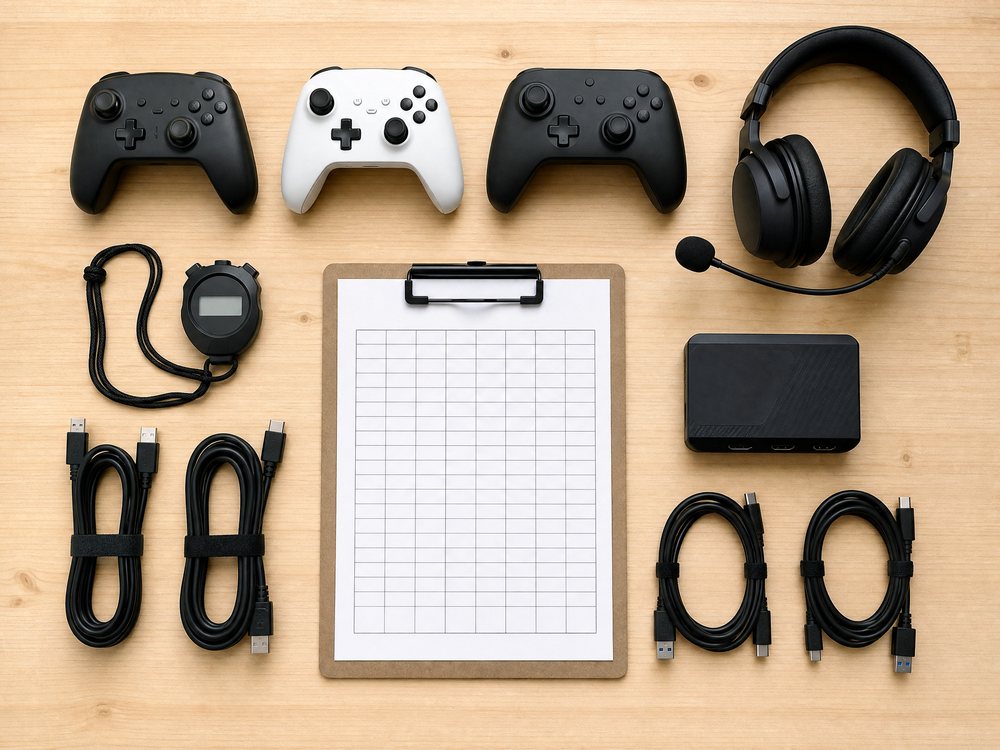
Controllers, headset and a scoring sheet laid out on a bench

Four questions behind every write-up

We do not use a numeric score. Instead every review answers the same four questions in plain English, in the same order, so you can compare two very different games without translating a number.

  1. Does it respect your time?
    How much of the runtime is genuinely designed, and how much is padding you are expected to tolerate.
  2. Can most people actually play it?
    Remappable inputs, subtitle sizing, colour reliance, motion options and difficulty granularity, all checked by hand.
  3. Is it stable on ordinary hardware?
    We test on a mid-range desktop, a five-year-old laptop and a handheld before drawing any conclusions.
  4. Will it still be interesting in a year?
    Every review is revisited twelve months later and updated in public, with the original text left visible.
Read the full method

From the letters page

Readers write in every week. These are three notes we asked permission to reprint.

“I bought a handheld last spring and had no idea which of the big releases would actually run on it. Your hardware notes are the only ones I have found that mention frame pacing rather than just resolution.”

Priya R. — Leicester

“The twelve-month revisit is a brilliant idea. Watching you change your mind about a game in public, with the old paragraph still there, is more useful than any launch-day verdict.”

Callum S. — Glasgow

“My son has limited hand movement and your input-remapping section saves us a lot of wasted evenings. Thank you for putting it near the top instead of burying it.”

Denise A. — Cardiff

The Reading Room digest

One email on Friday morning: the week's review, one older game we went back to, and a short note on what we got wrong. No tracking pixels, no partner mail.

Why weekly, not daily

A daily schedule would force us to write about games we had barely started. One review a week is the honest maximum for four people who finish what they play.

Corrections in the open

When we are wrong we add a dated note at the top of the article rather than quietly editing the sentence. The digest always lists that week's corrections.

Nothing for sale

Daxureli carries no shop, no affiliate links and no paid placements. Review copies are declared at the top of the article whenever we accept one.